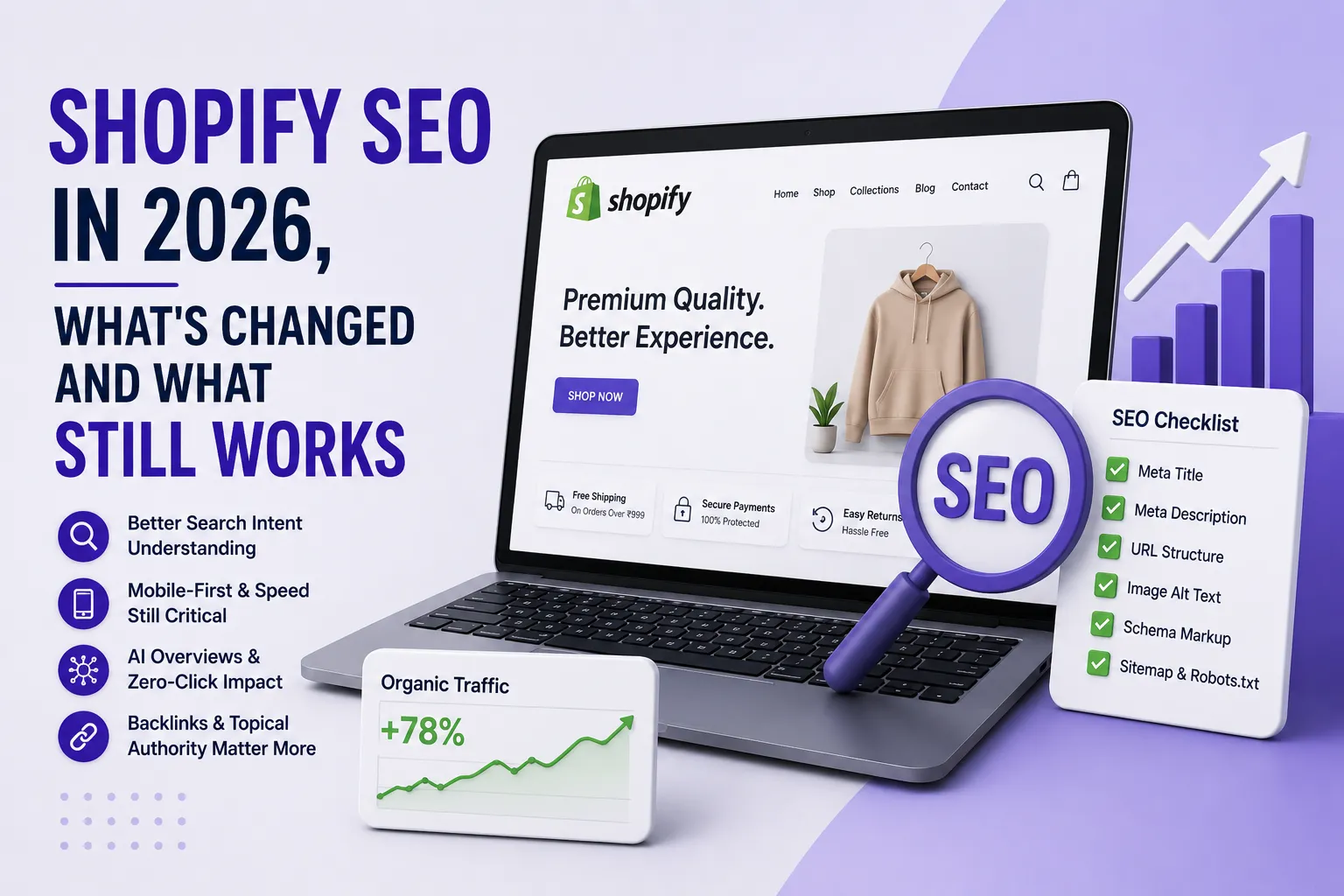
SEO for Shopify stores has evolved significantly. What worked in 2022 — stuffing keywords into product descriptions and building bulk backlinks — no longer moves the needle. In 2026, ranking a Shopify store on Google requires technical hygiene, genuine content quality, and structured internal linking. Here is what the current landscape looks like.
Crawlability, indexability, and page speed remain non-negotiable. Before anything else, your Shopify store should have a clean XML sitemap submitted to Google Search Console, no unintended noindex tags, no duplicate content from Shopify's default URL structure (the /collections/all/ page is a common culprit), and fast-loading pages — especially on mobile.
Shopify's structure creates specific challenges: canonical tag handling across products appearing in multiple collections, pagination in collection pages, and app-generated duplicate content. A proper Shopify SEO audit should address all of these before you invest in content or links.
Product pages are important, but collection pages are where the most search volume lives. Queries like "men's leather wallets online India" or "organic skincare for dry skin" target collections, not individual products. A well-optimised collection page has a unique H1, an introductory paragraph naturally including the primary keyword, and a filterable product grid.
Most Shopify stores leave collection pages with just a product grid and a generic title. That is a significant missed opportunity — optimising collection pages alone often produces more ranking movement than any amount of blog content.
Google's Helpful Content framework has made it clear: content written for search engines rather than humans is actively penalised. For Shopify stores, blog posts should answer real questions your customers have — not exist purely as keyword placeholders. A 1,500-word guide that genuinely helps someone make a purchasing decision serves a real need; a 300-word post that just mentions the keyword does not.
Every blog post is an opportunity to pass authority to your most important collection and product pages through internal links. A post about summer styling should link to the relevant collection. A buying guide should link to specific products. This is one of the most cost-effective eCommerce SEO strategies because it uses content you are already creating to strengthen your commercial pages.
Pair this with a broader digital marketing strategy and the compound effect becomes significant — your paid and organic channels start reinforcing each other.
Google's AI Overviews now appear above organic results for many informational queries. For eCommerce brands, transactional queries ("buy X online") are less affected — Shopping results and direct listings still dominate. However, informational content that gets cited in AI Overviews gains significant visibility, making quality content more valuable than ever.
eCom Conversion is a specialist Shopify SEO agency in India that handles everything from technical audits and collection page optimisation to content strategy and schema implementation. Paired with Shopify store development and performance marketing, we build organic growth that does not reset every month. See our work or get in touch.
Shopify provides solid basics — editable meta tags, automatic sitemaps, clean URL structures. But it does not handle everything. Collection page content, structured data (schema markup), duplicate URL issues, and image alt tags all require manual attention or an app.
For new stores targeting competitive keywords, 6–12 months is realistic before significant organic traffic arrives. For existing stores with an established domain, improvements can show up in 8–12 weeks. Consistent work compounds over time — this is not a one-time task.
Yes, with a caveat: only if the content is genuinely useful to your target audience. Thin, keyword-stuffed posts can actively harm your store's rankings since Google's Helpful Content updates. Quality long-form content that answers real questions drives meaningful traffic.
Schema markup is structured data that helps Google understand your content — product names, prices, reviews, and availability. Shopify includes basic product schema by default, but review schema, breadcrumb schema, and FAQ schema often need to be added separately for best results.

Collection pages generally have higher search volumes and should be prioritised. Once your main collection pages rank, the products they contain benefit from the authority of the parent page. Product page SEO matters most for long-tail, highly specific queries.
eCom Conversion is rated 4.9 out of 5 on average, based on numerous reviews across social platforms.
We help ecommerce brands grow. Not with guesswork, but with strategies that are tested, refined, and built around your numbers. From Shopify development to paid ads and SEO, we work like an extension of your team, not just another agency you hired.
© Copyright 2026. All Rights Reserved by eCom Conversion.