Did you know that more than 137,000 startups are launched every day? Yes, you heard that right. With so much competition in the industry, you cannot afford to spend money on marketing campaigns that take years to bring results and drive revenue. You need quick and measurable results that help you scale fast and get the most out of your marketing spend. This is why most D2C brands are leaving traditional brand-building behind and embracing performance marketing for D2C brands, because it’s smarter, faster, and ultimately more profitable.
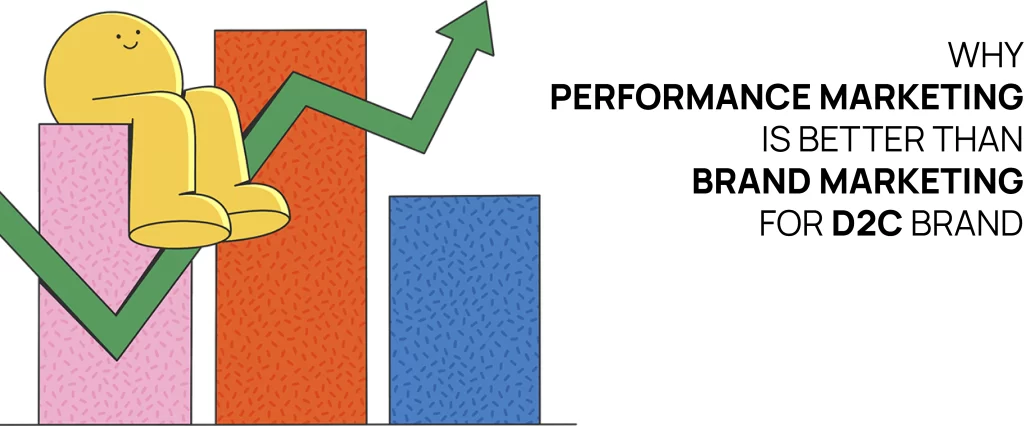
In this blog, we’ll discuss the differences between brand marketing and performance marketing and explain why direct-to-consumer performance marketing is a much quicker and better marketing strategy for D2C brands.
What’s the Difference Between Brand Marketing and Performance Marketing?
Brand marketing is all about long-term perception. It’s storytelling, emotional connection, and trust building. Consider billboards, viral campaigns, or great ideas that “go big” but aren’t necessarily attached to hard results.
Performance marketing is all about conversion-based advertising. You run an ad, and you pay only when someone clicks, buys, installs, or does something specific. It’s measurable, and every rupee matters.
To Know More , Visit – What is a Performance Marketing Agency? Services, Benefits & More
When it comes to brand marketing vs performance marketing, the actual differentiator is measurability. Brand marketing is like planting a tree that grows over a period of time. On the other hand, performance marketing for D2C brands is like hydroponics, where you control the inputs and achieve faster outcomes.
9 Reasons Why Performance Marketing Is Better Than Brand Marketing for D2C Brands
Here are nine reasons why performance marketing works much better than brand marketing for D2C brands in India:
1. Performance Marketing Is Measurable, Brand Marketing Isn’t
One of the most frightening issues that D2C founders face is understanding the effectiveness of their marketing spend. Brand marketing definitely creates awareness, but can you measure it? Not exactly.
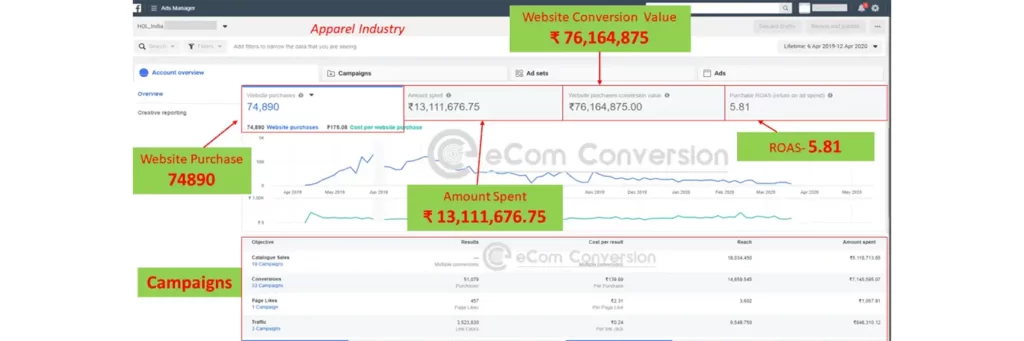
On the other hand, performance marketing for D2C brands is strictly ROI-driven marketing. There is a measurable goal for every campaign, like a click, a sign-up, or a sale. You precisely know how much you are spending and what you are getting out of it.
You can track metrics such as return on ad spend (ROAS), customer lifetime value, cost-per-click (CPC), and more using Google Analytics, Facebook Pixel, and Shopify integrations.
2. Performance Marketing Gives You Measurable ROI
D2C brands usually have very tight financials and don’t have the required budget to waste on vague impressions or brand awareness. They need to bring in more conversions.
That’s why ROI-driven marketing is vital. With the right performance marketing strategies, you can measure return on ad spend (ROAS) and optimize your campaigns. You know precisely what you’ve spent and precisely how much you’ve made. It’s not about wasting money; it’s about investing.
Example: You invest ₹50,000 on Facebook ads and make ₹200,000 in revenue with a 4x ROAS. Then, you can scale what works, eliminate what doesn’t. Easy.
Brand advertising can’t provide you with this type of exposure. That’s why direct-to-consumer performance marketing strategies are useful when you’re running low on marketing budget.
3. Faster Results = Faster Growth
Brand building is a very long-term game. It can take years before your name is recognized or your brand becomes recognizable.
D2C brands do not have that much time. They need results quickly.
Performance marketing for D2C brands gives you results in days, not months. Design a campaign in the morning, and you could be viewing conversions later that afternoon. That speed translates into rapid testing, rapid pivoting, and rapid scaling.
Paired with an effective customer acquisition strategy, performance marketing can help your brand scale like crazy. You don’t only test creative; you test price points, funnels, landing pages, and more. This is ideal for growth marketing for D2C brands that need to achieve product-market fit in a rush.
4. Data Is Power, and Performance Marketing Gives You Loads of It
Guess-based marketing will cost you a lot of money. That’s why data-driven marketing decisions are the backbone of performance campaigns. With performance marketing, you can use data to scale and optimize fearlessly.
With brand marketing, you can’t track as directly. Sure, you might get brand awareness, but how does that translate to revenue?
Performance marketing D2C campaigns provide you with all those nitty-gritty facts:
- Which ad copy is doing the best?
- Which audience segment makes the most purchases?
- What creative performs best at ROAS?
- What time of day generates max buys?
These metrics can lead to better decisions and ultimately more results. You reduce waste, double up on what works best, and always optimize.
And with tools like Google Analytics, Meta Ads Manager, and third-party pixel tracking, you’re always in control.
5. Retargeting and Personalization = Improved Conversions
Brand advertising targets the masses. But D2C brands thrive on retargeting and personalization.
With performance-based ads, you can segment shoppers, monitor behavior, and deliver targeted messaging.
- First-time shopper? Blast them with a welcome discount.
- Abandoned cart? Set off an urgency-based ad.
- Loyal customer? Upsell a premium product.
This type of one-on-one connection is not possible with traditional brand campaigns.
When it comes to performance marketing vs brand marketing, performance marketing wins due to its personalisation. The more you’re relevant, the more conversions you’ll have. And relevance is the magic bullet of performance marketing.
6. Customer Acquisition Is the #1 Priority for D2C Brands
Unlike traditional businesses, D2C brands don’t have distributors or retailers to count on. You’re the sole manager of your customer relationships. This means that your customer acquisition strategy is your foundation.
And nothing will suit you faster than direct-to-consumer performance marketing.
You can execute hyper-targeted campaigns based on interests, behaviors, and demographics. You can separate repeat buyers from first-time visitors and cart abandoners from loyalists. Such pinpoint targeting powers successful acquisition on scale.
Rather than customers discovering your brand, you discover them and speak to them directly. Plus, every campaign contains a call to action that brings in direct conversions.
7. It’s Budget-Friendly and Scalable
Most D2C brands in their early days don’t have massive budgets. They simply cannot waste 3 months on a TV advertisement just to “create awareness.” Performance marketing allows you to test small and scale quickly.
Got ₹10,000? Invest it in a campaign, test it, optimize it. If it works, bump up the budget. If it fails, cut it loose and experiment with something else. Such flexibility is a major advantage of growth marketing for D2C brands.
Brand advertising needs a large amount of money upfront. And if it fails, no refund.
8. Performance Drives Your Brand, Not the Other Way Around
Most D2C brands establish their brand on the basis of performance. You do not have to begin with a huge brand campaign. Begin with performance, create momentum, get customers, and let customers create your brand. Satisfied customers become promoters. Great products go viral. Reviews build trust. Your performance success, over time, becomes your brand. This is the smarter, more flexible, and practical marketing strategy that works very well for most D2C brands.
9. Direct Feedback Loop Accelerates Learning
Brand marketing is, by its nature, static. You just let it out there and hope for the best. Performance marketing is dynamic. You’re continually:
- A/B testing headlines
- Testing audiences
- Trying different creatives
- Optimizing landing pages
- Tweaking your bidding strategy
This model of conversion-based advertising allows you to fail fast, learn fast, and optimize constantly. In a D2C environment where competition is high and margins are low, that adaptability is essential.
To know how can performance marketing help startups grow , Visit – Performance Marketing for Startups: Small Budgets, Big Results
Final Thoughts
If you are building a D2C brand, then you should focus on quick and measurable results. Performance marketing for D2C brands can help you with that. It’s measurable. It’s scalable. It’s efficient. And it puts you in complete control. If you want steady revenue, smart expenditure, and fast expansion, direct-to-consumer performance marketing is how you can achieve that.
Brand marketing can also help you, but it is a very long-term game and needs a huge marketing budget. Once you’ve developed momentum, you can then transition to brand marketing, but performance marketing is much better and effective initially.
At eCom Conversion, we specialize in performance marketing for D2C brands that help them scale super fast and bring in more money with conversions. So, if you want to grow your business, then get in touch with our team today!